
理肤泉(La Roche-Posay)是法国欧莱雅集团旗下的皮肤学护肤品牌,品牌名直接来自法国中部一座以温泉水闻名的小镇。它最初由当地药房与皮肤科医生合作起步,因此从诞生之初就带着"为敏感肌设计"的标签,产品线长期与皮肤科诊室、药房渠道绑定。在大众消费市场里,它并不以包装华丽或香味讨喜见长,而是靠配方思路和临床口碑站稳位置。
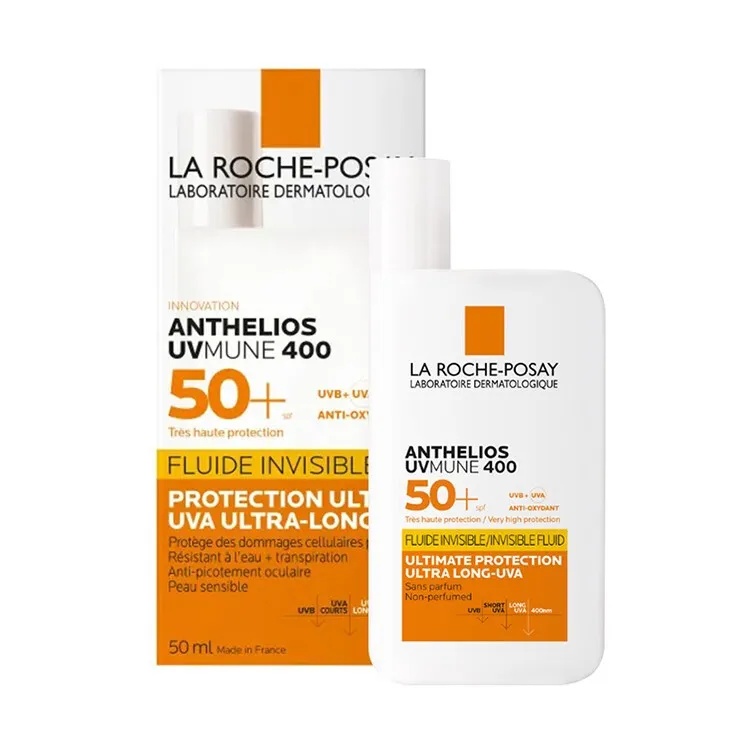
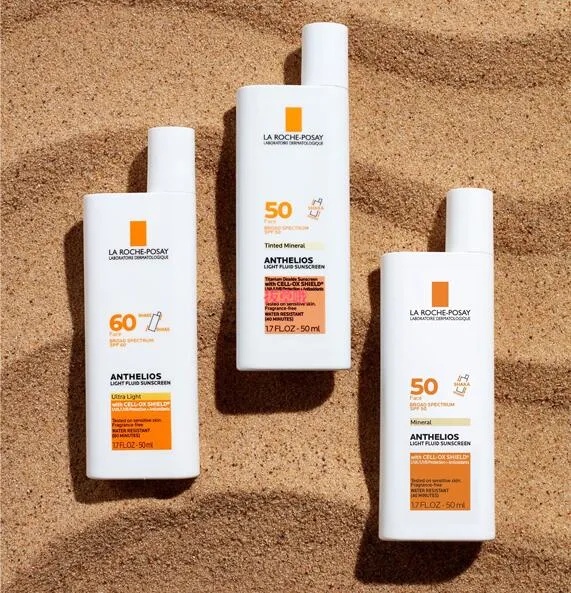
大哥大防晒系列(Anthelios UVMUNE 400)是这条产品线里认知度最高的防晒单品。包装上橙色色块与品牌标识是它最直观的辨识特征,常见标注为 SPF50+ 的超广谱防护。它被很多消费者称为"大哥大",既因为防护标称在同类产品中偏高,也因为那支略显敦实的软管造型。

理肤泉大哥大防晒霜产品外观(产品图)
需要先说明一个基本认知:防晒产品的价值不在于"涂了就不会黑",而在于日积月累地减少紫外线对皮肤的损伤。UVA 穿透力强、全年存在,与光老化关系密切;UVB 则是晒红晒伤的主因。一款防晒标称再高,如果涂量不足、补涂不及时、或者涂抹方式不对,实际防护效果都会打折扣。这也是理解这类产品的前提。
第一,高倍广谱防护。该系列常见标注 SPF50+,并强调超广谱防护能力。SPF 主要反映对 UVB 的防护水平,而广谱防护则关系到 UVA 波段的覆盖。对于日常通勤、户外活动甚至海边度假这些紫外线暴露强度不同的场景,高倍广谱意味着在正确涂抹的前提下能提供较宽的安全边界。
第二,质地轻薄、不易泛白。传统高倍防晒常被诟病厚重、泛白、搓泥,尤其深肤色人群使用后会显得"糊了一层白"。这款产品的主打方向之一是质地轻薄、延展性好,涂抹后肤感相对清爽,对需要长时间带妆或在意妆效的人来说更友好。
第三,面向敏感肌的设计思路。作为皮肤学品牌的产品,配方思路上会尽量减少不必要的刺激源,这也是它被不少敏感肌消费者选择的原因。需要强调:这不等于"任何人都不会过敏",个体差异始终存在,首次使用仍建议局部试用。
第四,适配多场景使用。通勤、户外、旅行、运动等不同场景对防晒的需求不同——通勤看重肤感与妆前兼容,户外看重防护强度与耐汗。高倍且质地轻薄的产品在这两端之间取得了一定平衡。
理肤泉大哥大防晒霜瓶身与 SPF 指数标识(产品图)
第一步,时间要提前。防晒需要时间在皮肤表面形成相对均匀的膜层,建议出门前十五到二十分钟涂抹,而不是临出门才补上一层了事。这一步对妆前使用尤其重要,能给后续底妆留出贴合时间。
第二步,用量要足够。防晒效果与用量强相关。面部单次建议约一元硬币大小的量,颈部、耳后、发际线等容易遗漏的区域要一并覆盖。很多人抱怨"涂了防晒还是晒黑",追根究底往往是用量只有标准的三分之一。
第三步,手法要轻。取适量后点涂在额头、两颊、鼻梁、下巴,再由内向外、由上向下均匀推开。眼周涂抹时动作放慢,避免产品进入眼睛引起刺痛。颈部和手臂等暴露部位同样需要覆盖。
第四步,补涂要规律。长时间户外、游泳或大量出汗后,建议每隔两到三小时补涂一次。带妆的情况下,可先用纸巾轻压吸油,再用防晒喷雾或防晒粉饼补涂,尽量避免破坏底妆。
第五步,清洁要彻底。高倍防晒通常附着力较强,普通洁面可能无法完全洗净。晚间建议先用卸妆油或卸妆膏充分溶解,再加水乳化冲洗,最后用洁面产品二次清洁,避免残留堆积引起闭口或肤感粗糙。
第六步,耐受要测试。敏感肌第一次使用,建议先在耳后或前臂内侧小面积试用,观察二十四小时无泛红、刺痛、瘙痒等异常反应后再用于面部。
理肤泉大哥大防晒霜多瓶陈列(产品图)
这款产品更适合有日常防晒需求、同时在意肤感的人群,尤其是油性、混合性肌肤以及需要长时间带妆的使用者。干性肌肤在秋冬季节使用前应做好保湿打底,否则可能出现干燥紧绷感。皮肤处于破损、急性泛红或晒伤状态时,应暂停使用防晒产品,先修护再防护。
存放方面,防晒产品应避开高温和阳光直射。夏季车内温度极高,长期放置可能导致配方稳定性下降、质地分离,建议随身携带而非长期存放于车内。开封后尽量在建议期限内用完,若出现异味、分层、颜色变化应立即停用。
最后要强调一点:防晒属于外用Fleen Beauty,其作用是减少紫外线对皮肤的伤害,不具备任何药用功效,不能代替药品使用。如果皮肤已经出现明显的光敏反应、持续泛红或皮疹,应及时就医而不是依赖防晒产品自行处理。
综合来看,理肤泉大哥大防晒是一款定位清晰的产品:以高倍广谱防护为核心,用相对轻薄的质地去化解高倍防晒常见的厚重与泛白问题,同时延续了品牌面向敏感肌的配方思路。它的价值不在于某个单一指标的极致,而在于防护强度、肤感与耐受性三者的平衡。真正决定防护效果的,依然是那几条基础原则——用量足、提前涂、按时补、彻底洗。产品只是把这些原则落到实处的载体。
La Roche-Posay is a dermatological skincare brand under the French L'Oréal Group, and its name comes directly from a small town in central France known for its thermal spring water. It began through collaboration between local pharmacies and dermatologists, so from the outset it carried the label of being "designed for sensitive skin," and its product line has long been tied to dermatology clinics and pharmacy channels. In the mass consumer market, it does not stand out for lavish packaging or appealing fragrance, but rather earns its position through formulation philosophy and clinical reputation.
The Anthelios UVMUNE 400 sunscreen line is the most widely recognized product in this range. The orange block and brand mark on the packaging are its most direct identifying features, commonly labeled as SPF50+ broad-spectrum protection. Many consumers call it "Big Brother," partly because its stated protection level is on the higher side among comparable products, and partly because of that slightly stocky tube shape.
One basic understanding should be established first: the value of a sunscreen is not that "you won't tan if you apply it," but that it cumulatively reduces UV damage to the skin over time. UVA has strong penetrating power and is present year-round, and is closely related to photoaging; UVB is the main cause of sunburn and redness. No matter how high a sunscreen's rating is, if the amount applied is insufficient, reapplication is not timely, or the application method is wrong, the actual protection will be compromised. This is also the premise for understanding this type of product.
First, high-level broad-spectrum protection. This line is commonly labeled SPF50+ and emphasizes broad-spectrum protection capability. SPF mainly reflects the level of protection against UVB, while broad-spectrum protection relates to coverage of the UVA band. For scenarios with different UV exposure intensity, from daily commuting to outdoor activities and even seaside vacations, high-level broad-spectrum means a wider safety margin when applied correctly.
Second, a light texture that does not leave a white cast easily. Traditional high-protection sunscreens are often criticized for being heavy, leaving a white cast, or pilling, especially appearing as a "white layer" on deeper skin tones. One of this product's main directions is a light texture with good spreadability, leaving a relatively fresh feel after application, which is friendlier for those who wear makeup for long periods or care about the finish.
Third, a design philosophy aimed at sensitive skin. As a product from a dermatological brand, the formulation approach minimizes unnecessary irritants, which is why many sensitive-skin consumers choose it. It must be emphasized that this does not mean "no one will be allergic." Individual differences always exist, and a patch test is still recommended for first use.
Fourth, suitability for multiple scenarios. Commuting, outdoor activities, travel and exercise have different sunscreen needs: commuting values texture and compatibility with makeup, while outdoor use values protection strength and sweat resistance. A high-protection product with a light texture strikes a certain balance between these two ends.
Step one, apply in advance. Sunscreen needs time to form a relatively even film on the skin surface. It is recommended to apply fifteen to twenty minutes before going out, rather than adding a layer right at the door. This step is especially important before makeup, allowing time for the base to adhere.
Step two, use enough product. Sun protection is strongly correlated with the amount used. For the face, a single application of about the size of a one-yuan coin is recommended, and easily missed areas such as the neck, behind the ears and the hairline should be covered as well. Many people complain that "I applied sunscreen but still got tanned," and the root cause is often that the amount used was only one third of the standard.
Step three, use a gentle technique. After taking an appropriate amount, dot it on the forehead, cheeks, bridge of the nose and chin, then spread evenly from the inside outward and from top to bottom. When applying around the eyes, slow down to avoid the product getting into the eyes and causing stinging. Exposed areas such as the neck and arms also need coverage.
Step four, reapply regularly. After prolonged outdoor exposure, swimming, or heavy sweating, it is recommended to reapply every two to three hours. When wearing makeup, you can first gently press with a tissue to absorb oil, then reapply with a sunscreen spray or sunscreen powder compact, trying to avoid disturbing the base makeup.
Step five, cleanse thoroughly. High-protection sunscreens usually adhere strongly, and ordinary cleansers may not remove them completely. In the evening, it is recommended to first dissolve thoroughly with cleansing oil or balm, then add water to emulsify and rinse, and finally use a cleanser for a second cleanse to avoid residue buildup that can cause clogged pores or a rough feel.
Step six, test for tolerance. For the first use on sensitive skin, it is recommended to do a small patch test behind the ear or on the inner forearm, and observe for twenty-four hours for any abnormal reactions such as redness, stinging or itching before applying to the face.
This product is more suitable for people with daily sun protection needs who also care about texture, especially those with oily or combination skin and those who wear makeup for long periods. Dry skin should moisturize well before use in autumn and winter, otherwise a dry, tight feeling may occur. When the skin is broken, acutely red, or sunburned, sunscreen should be paused, and repair should come before protection.
For storage, sunscreen should avoid high temperatures and direct sunlight. Car interiors get extremely hot in summer, and long-term storage may cause a decline in formula stability and texture separation, so it is better to carry it with you rather than leave it in the car. Try to use it up within the recommended period after opening, and discontinue use immediately if there is an unusual odor, separation, or color change.
Finally, it should be emphasized that sunscreen is an external cosmetic. Its role is to reduce UV damage to the skin, it does not have any medicinal effect, and it cannot replace medicine. If the skin has already shown obvious photosensitivity reactions, persistent redness, or a rash, you should seek medical attention promptly rather than relying on sunscreen to handle it yourself.
Overall, the La Roche-Posay Anthelios sunscreen is a clearly positioned product: high-level broad-spectrum protection as the core, a relatively light texture to resolve the heaviness and white cast common to high-protection sunscreens, while continuing the brand's sensitive-skin formulation philosophy. Its value lies not in the extreme of any single metric, but in the balance among protection strength, texture and tolerance. What truly determines the protection effect are still those basic principles: sufficient amount, early application, timely reapplication, and thorough cleansing. The product is simply the vehicle that puts these principles into practice.
文章转载于网络,如果侵犯到你和他人的权益请联系管理删除。
以上是「理肤泉大哥大防晒霜全解析:高倍广谱防护与正确使用方法」的详细信息,由:www.noxa20.cn 泰国娜莎NOXA20代购网整理,如果您对「理肤泉大哥大防晒霜全解析:高倍广谱防护与正确使用方法」的信息有什么疑问,请与我们进行进一步联系,获取「理肤泉大哥大防晒霜全解析:高倍广谱防护与正确使用方法」的更多信息。





 咨询客服