
科颜氏(Kiehl's)是美国欧莱雅集团旗下的护肤品牌,起源可以追溯到十九世纪纽约的一家药房。这家药房当年除了配药,也自制一些草本配方的护理用品,这种"从药房长出来"的出身,让品牌至今保留着偏草本、偏实用、包装朴素的调性——白底黑字的标签、透明瓶身、不刻意修饰的外观,都和它早期的药房基因有关。
金盏花植物爽肤水(Calendula Herbal Extract Alcohol-Free Toner)是这条产品线里辨识度最高的单品之一。透明瓶身里能直接看到漂浮的金盏花瓣,这个视觉设计几乎成了它的标志。从名字可以看出两个关键信息:一是以金盏花提取物为核心成分方向,二是标注为不含酒精配方——这两点共同决定了它在爽肤水品类里的定位。
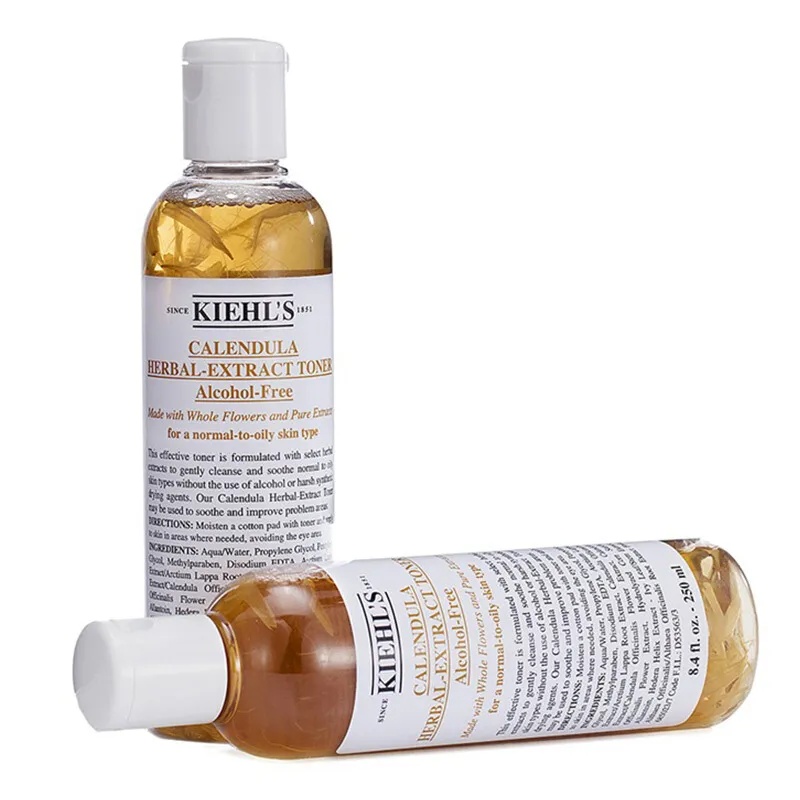
科颜氏金盏花爽肤水双瓶展示(产品图)
要理解这款产品的价值,先要理解爽肤水在现代护肤流程中的角色变化。早年爽肤水的主要功能是"二次清洁"——洗掉洁面残留的皂垢;后来随着洁面产品配方升级,这个功能的重要性下降,爽肤水的定位逐渐转向"调理":在洁面之后、精华之前,帮助皮肤恢复舒服的状态,为后续产品打好吸收基础。金盏花水正是沿着调理这条思路设计的产品。
第一,舒缓安抚。金盏花在传统草本护理中一直被视为偏舒缓取向的植物成分。对于换季时容易泛红、洗脸后容易紧绷、或者日晒后皮肤状态不稳的情况,这类成分方向的爽肤水能起到一定的安抚作用。它不是"灭火器",更多是日常的温和调节。
第二,调节水油平衡。这是它被油性与混合性肌肤人群喜爱的核心原因。清爽的水状质地,涂抹后不会带来黏腻负担,同时帮助皮肤在洁面后的干燥感与后续出油之间取得平衡。对于T区容易泛油、两颊偏干这种典型混合肌状态,清爽型爽肤水的适配度较高。
第三,二次清洁。虽然洁面产品的清洁力已经足够,但用化妆棉蘸取爽肤水轻擦全脸,仍能带走洁面后残留的少量污垢与老废角质,让皮肤表面更干净通透。这一步对经常带妆、城市污染环境下生活的人来说有实际意义。
第四,不含酒精,适配敏感肌。含酒精的爽肤水虽然用起来清凉、收敛感强,但对屏障较弱的皮肤可能带来刺激。标注不含酒精的配方,正是为了照顾这部分人群——用起来温和,不会一上脸就刺痛或泛红。
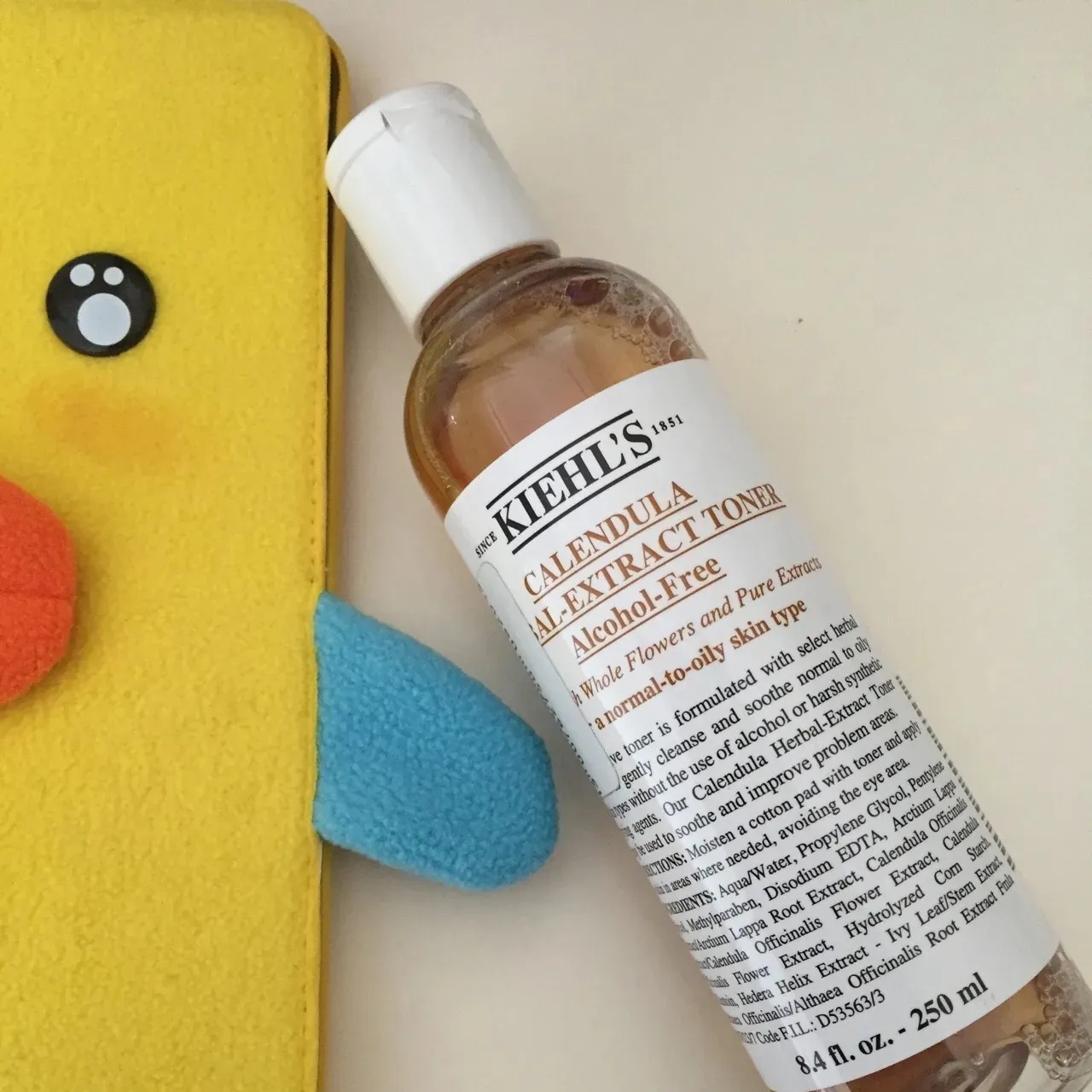
科颜氏金盏花爽肤水瓶身细节(产品图)
第一步,洁面后立即使用。洗脸之后皮肤水分流失较快,建议在洁面后尽快使用爽肤水,趁皮肤还微湿时补充水分,锁水效果更好。间隔太久反而会让皮肤先干一阵再补水,体验打折。
第二步,选择合适的方式。有两种常见用法:一是倒在化妆棉上,由面中部向外、由下向上轻轻擦拭,兼顾二次清洁;二是直接倒在手心,双手合拢后轻拍全脸,更偏补水。前者适合需要清洁残留的场合,后者适合皮肤偏干或敏感时期。
第三步,控制用量与力度。用化妆棉时不要用力摩擦,尤其是两颊和眼周这些皮肤较薄的区域,轻擦即可。用量上不必过分节省,湿润但不过度滴水较为合适。
第四步,局部湿敷。对T区泛油、局部泛红或日晒后发热的区域,可以用化妆棉浸透后湿敷两到三分钟,做一次集中调理。湿敷时间不宜过长,超过五分钟反而可能因水分蒸发带走皮肤自身水分。
第五步,后续接续护理。爽肤水只是流程中的一环,用完仍需接精华与面霜锁水,只靠爽肤水无法完成保湿闭环。白天还需叠加防晒。
第六步,注意瓶内花瓣。瓶中的金盏花瓣是配方的一部分,属正常现象。使用时不必刻意摇晃,避免花瓣堵住瓶口;若出现花瓣大量沉淀、液体浑浊或异味,应停止使用。
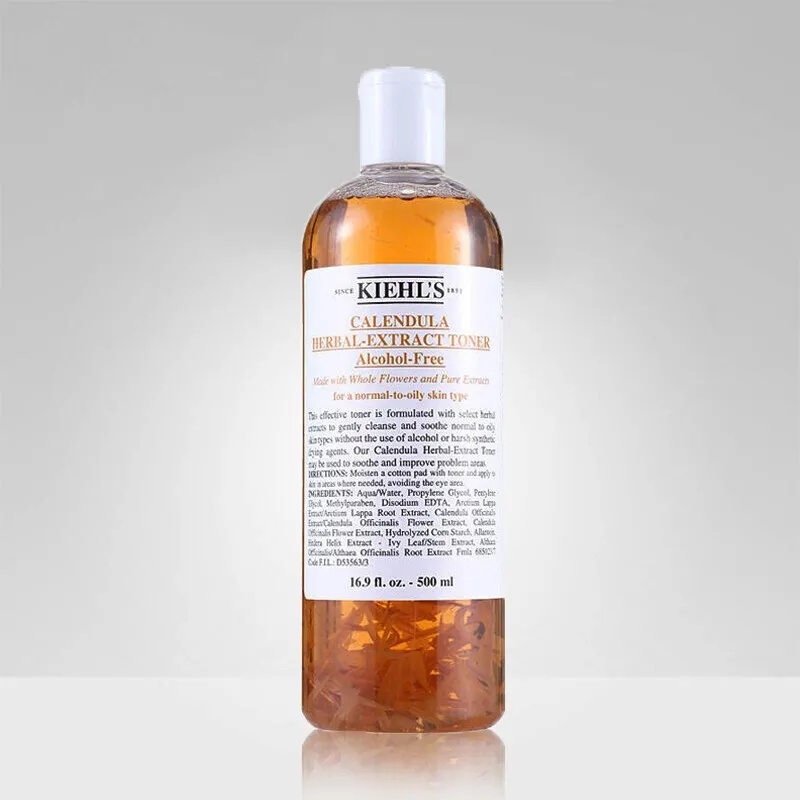
科颜氏金盏花爽肤水正面标准产品图(产品图)
这款爽肤水更适合油性、混合性肌肤,以及希望在洁面后获得清爽调理感的人群。干性肌肤在秋冬使用后可能觉得滋润度不足,需要尽快叠加保湿精华与面霜。敏感肌虽然配方不含酒精、取向温和,但植物提取物本身仍存在个体过敏可能,建议首次使用先在耳后或下颌边缘小范围测试,观察二十四小时无异常再全脸使用。
存放上应避开高温与阳光直射,透明瓶身更容易受光线影响,建议放在阴凉处或柜内。开封后尽量在建议期限内用完。使用时避免产品进入眼睛,若不慎入眼用大量清水冲洗。
需要说明的是,爽肤水属于外用防晒,其作用是日常调理与补水,不具备药用功效,不能代替药品。如果皮肤已经出现明显的炎症、持续泛红、脱屑或刺痛,应先就医明确原因,而不是靠更换爽肤水来解决。另外,任何单一产品都无法替代完整的护肤流程——清洁、保湿、防晒这三件事做扎实,才是皮肤状态稳定的基础。
科颜氏金盏花水是一款定位清晰的调理型爽肤水:不含酒精、质地清爽、以植物提取物为成分方向,重点服务于油性与混合性肌肤在洁面后的舒缓与水油调节需求。它的长处是温和、好上手、不容易出错;局限也很明确——保湿力有限,干皮单用不够,功效层面属于"辅助调理"而非"主力改善"。把它放在正确的流程位置上,理解它承担的是哪一环,才能让它的价值被真正发挥出来。
Kiehl's is a skincare brand under the French L'Oréal Group in the United States, and its origins trace back to a pharmacy in nineteenth-century New York. In addition to dispensing medicine, that pharmacy also made some herbal-formula care products. This "grown from a pharmacy" background has allowed the brand to retain a herbal, practical, and plainly packaged character to this day: white labels with black text, transparent bottles, and an appearance that is not deliberately embellished, all related to its early pharmacy genes.
The Calendula Herbal Extract Alcohol-Free Toner is one of the most recognizable products in this line. The floating calendula petals are directly visible inside the transparent bottle, and this visual design has almost become its signature. Two key pieces of information can be seen from the name: first, it uses calendula extract as the core ingredient direction; second, it is labeled as an alcohol-free formula. Together, these two points determine its positioning in the toner category.
To understand the value of this product, one must first understand the changing role of toner in modern skincare routines. In the early days, the main function of toner was "secondary cleansing" — washing away soap residue left by cleansers. Later, as cleanser formulas were upgraded, the importance of this function declined, and the positioning of toner gradually shifted to "conditioning": after cleansing and before serum, helping the skin return to a comfortable state and laying a good foundation for the absorption of subsequent products. Calendula toner is a product designed along this line of conditioning thinking.
First, soothing and calming. Calendula has long been regarded in traditional herbal care as a plant ingredient with a soothing orientation. For situations such as easy redness when seasons change, tightness after washing the face, or unstable skin condition after sun exposure, a toner with this ingredient direction can provide a certain calming effect. It is not a "fire extinguisher" but more of a gentle daily regulation.
Second, regulating the oil-water balance. This is the core reason it is favored by people with oily and combination skin. With a fresh watery texture, it does not bring a sticky burden after application, while helping the skin strike a balance between the dryness after cleansing and subsequent oil production. For the typical combination skin state where the T-zone tends to shine and the cheeks are drier, a fresh toner has higher compatibility.
Third, secondary cleansing. Although the cleansing power of cleansers is already sufficient, wiping the whole face with a cotton pad soaked in toner can still remove a small amount of dirt and dead skin cells left after cleansing, making the skin surface cleaner and more transparent. This step has practical significance for people who frequently wear makeup or live in urban polluted environments.
Fourth, alcohol-free and suitable for sensitive skin. Although alcohol-containing toners feel cool and have a strong astringent effect, they may cause irritation to skin with a weaker barrier. The alcohol-free formula is precisely to take care of this group of people: it feels gentle and will not sting or redden immediately upon application.
Step one, use immediately after cleansing. After washing the face, the skin loses moisture relatively quickly. It is recommended to use toner as soon as possible after cleansing, replenishing moisture while the skin is still slightly damp for better moisture retention. Waiting too long will instead let the skin dry out first and then be moisturized, reducing the experience.
Step two, choose the appropriate method. There are two common ways: first, pour it onto a cotton pad and gently wipe from the center of the face outward and from bottom to top, which also provides secondary cleansing; second, pour it directly into the palm, bring the hands together and gently pat the whole face, which is more about hydration. The former is suitable for occasions requiring removal of residue, and the latter is suitable for dry or sensitive periods.
Step three, control the amount and pressure. When using a cotton pad, do not rub hard, especially on the cheeks and around the eyes where the skin is thinner; a gentle wipe is enough. There is no need to be overly frugal with the amount; damp but not dripping is appropriate.
Step four, localized wet compress. For areas with T-zone shine, localized redness, or heat after sun exposure, you can soak a cotton pad and apply it as a wet compress for two to three minutes for a concentrated conditioning treatment. The wet compress should not be too long; more than five minutes may instead take away the skin's own moisture due to evaporation.
Step five, continue with follow-up care. Toner is only one step in the routine. After use, serum and cream are still needed to lock in moisture; toner alone cannot complete the hydration loop. Sunscreen should also be layered on during the day.
Step six, note the petals in the bottle. The calendula petals in the bottle are part of the formula and are normal. There is no need to shake deliberately during use to avoid the petals blocking the bottle mouth. If there is a large amount of petal sediment, cloudy liquid, or unusual odor, use should be discontinued.
This toner is more suitable for oily and combination skin, as well as people who want a fresh conditioning feel after cleansing. Dry skin may find the moisturizing level insufficient after use in autumn and winter, and should layer moisturizing serum and cream as soon as possible. Although the formula for sensitive skin is alcohol-free and gentle in orientation, plant extracts themselves may still cause individual allergies. It is recommended to do a small patch test behind the ear or along the jawline the first time, and observe for twenty-four hours before using on the whole face.
For storage, avoid high temperatures and direct sunlight. The transparent bottle is more susceptible to light, so it is recommended to keep it in a cool place or inside a cabinet. Try to use it up within the recommended period after opening. Avoid getting the product into the eyes during use; if it accidentally gets in, rinse with plenty of water.
It should be noted that toner is an external cosmetic. Its role is daily conditioning and hydration, it does not have medicinal effects, and it cannot replace medicine. If the skin has already shown obvious inflammation, persistent redness, flaking, or stinging, you should first seek medical attention to identify the cause rather than relying on changing toner to solve it. In addition, no single product can replace a complete skincare routine. Doing the three things well — cleansing, moisturizing and sun protection — is the foundation for stable skin condition.
Kiehl's Calendula toner is a clearly positioned conditioning toner: alcohol-free, fresh in texture, with plant extracts as the ingredient direction, focusing on serving the soothing and oil-water regulation needs of oily and combination skin after cleansing. Its strengths are gentleness, ease of use, and low risk of mistakes. Its limitations are also clear: limited moisturizing power, insufficient for dry skin alone, and its efficacy level is "auxiliary conditioning" rather than "primary improvement." Only by placing it in the correct position in the routine and understanding which link it handles can its value be truly brought into play.
文章转载于网络,如果侵犯到你和他人的权益请联系管理删除。
以上是「科颜氏金盏花爽肤水全解析:舒缓调理与二次清洁怎么用」的详细信息,由:www.noxa20.cn 泰国娜莎NOXA20代购网整理,如果您对「科颜氏金盏花爽肤水全解析:舒缓调理与二次清洁怎么用」的信息有什么疑问,请与我们进行进一步联系,获取「科颜氏金盏花爽肤水全解析:舒缓调理与二次清洁怎么用」的更多信息。









 咨询客服